
Miksgrow circular & peat-free substrates for professional growers
Miksgrow products are a high-performance substrates designed for growers who seek to maximize plant growth while minimizing their environmental impact.
These ready-to-use substrates have a stable structure, excellent porosity, and aeration, promoting healthy and vigorous root development.
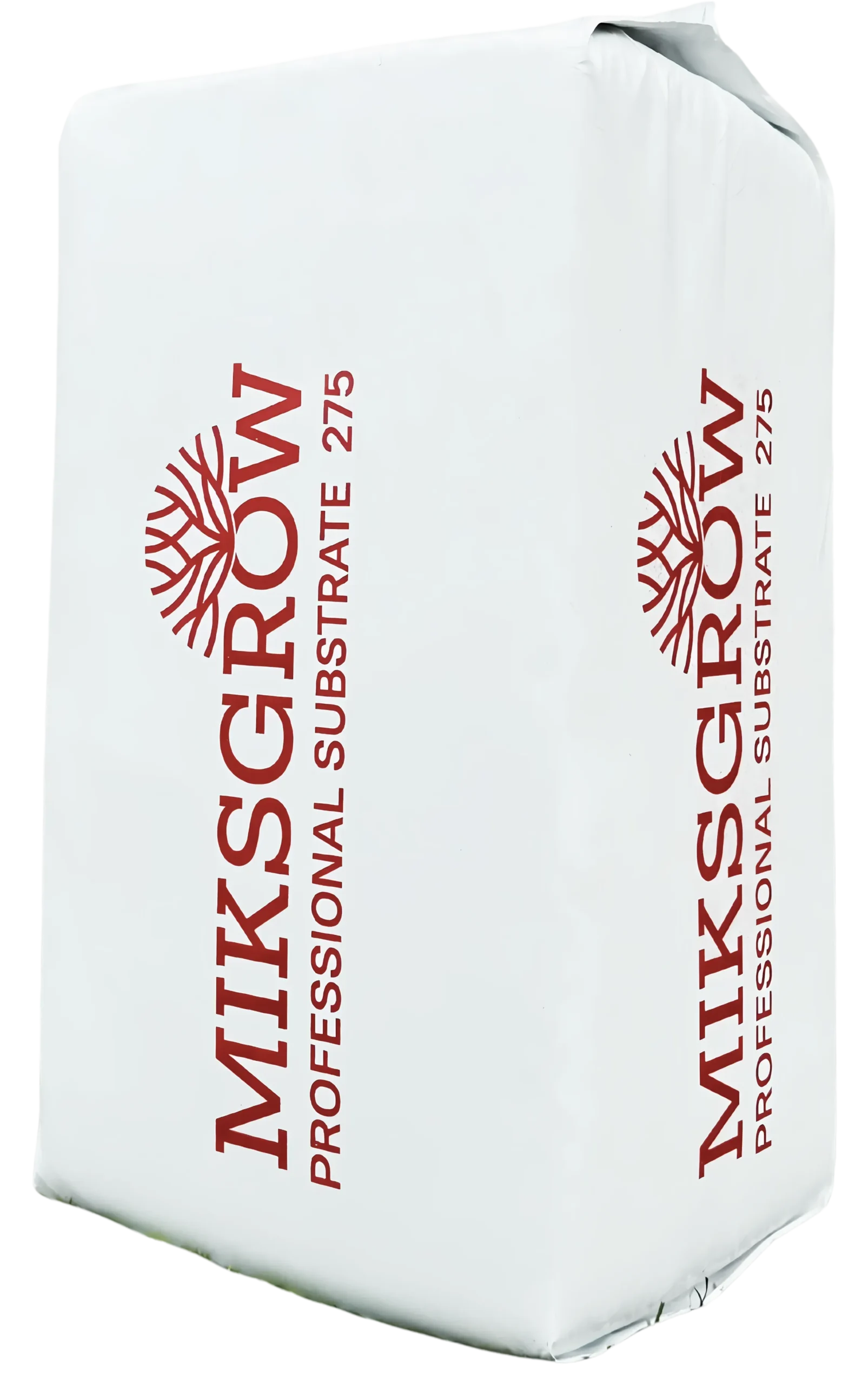

Miksgrow product range
Miksgrow products are high-performance, ready-to-use substrates designed for growers who want to maximize plant growth while minimizing environmental impact. With a stable structure, excellent porosity, and high aeration, they support healthy, vigorous root development.
Potting Substrate MXX
Fine Seedling Substrate MYY
Peat-free
growing tips
In our blog you’ll find practical cultivation advice, guides for choosing substrates and real-life stories from experienced growers. Learn how to get the most out of Miksgrow substrates and increase your yields in a sustainable way.
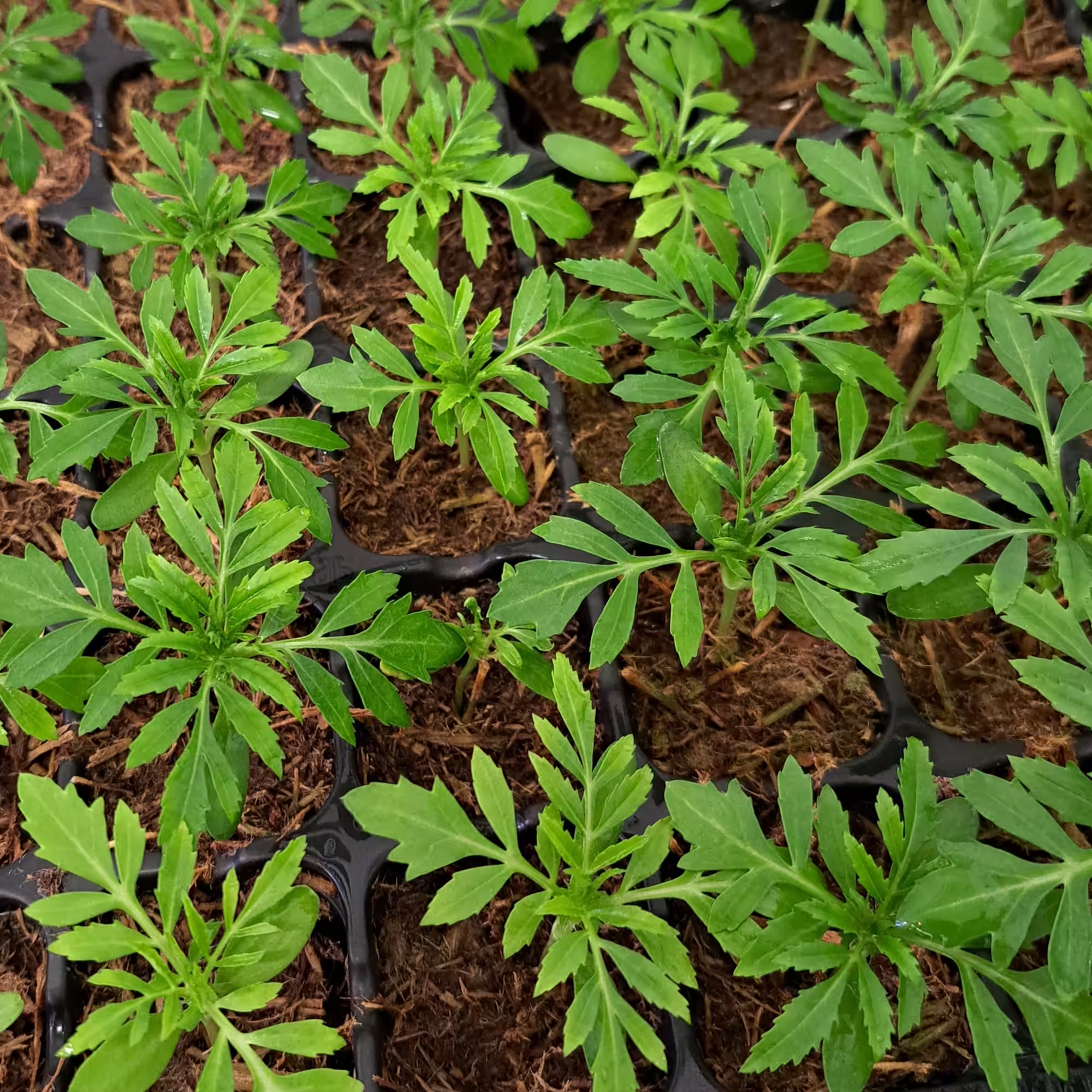
Knowledge
Events and trainings
We take part in horticultural fairs, demo days and trainings where we share know-how and showcase Miksgrow substrates in action. Meet our team, ask technical questions and discover new ways to develop your production.
FAQ
How do I choose the right substrate for my crop and irrigation system?
Miksgrow substrates are designed for a wide range of crops and cultivation systems, providing reliable performance as a versatile greenhouse and nursery growing medium. To select the right Miksgrow substrate, consider your production stage and crop requirements:
- Miksgrow MXX – A finer grade specifically formulated for seedling production and propagation, where uniform moisture distribution and good seed-to-substrate contact are essential.
- Miksgrow MYY – A coarser grade designed for potting up, repotting, and nursery container cultivation, offering improved drainage and air porosity for established plants.
Both grades are suitable for ornamentals, vegetables, and nursery plants across multiple production stages. For irrigation system compatibility, consider that the finer MXX grade retains more moisture and requires less frequent watering, while the coarser MYY grade provides better drainage for overhead or drip irrigation systems with established root systems.
What materials are used to produce Miksgrow substrate?
Miksgrow peat-free substrates are produced mainly from softwood raw materials such as Baltic pine, sourced from sustainably managed Estonian forests. These softwood fibers provide strong structural stability during cultivation, helping the substrate maintain its physical properties throughout extended production cycles.
To further improve performance, Miksgrow also incorporates bark fibers. Bark naturally contains higher levels of phosphorus and potassium than standard wood fiber, which helps enhance the substrate’s nutrient profile and supports better overall nutrient availability for crops.
Do watering practices need adjustment with Miksgrow susbtrates?
Yes. When transitioning to Miksgrow peat-free substrate, irrigation practices typically need some adjustment. During the first production cycles, monitor moisture levels closely to understand how the substrate behaves in your specific system. Using moisture sensors can be especially helpful, as they provide objective readings and reduce the risk of over- or under-watering.
It is also common for the surface layer to dry out faster, which can give the impression that the whole substrate is too dry. In most cases, the lower profile still retains adequate moisture for the root zone thanks to the substrate’s stable, non-compacting structure. For best results, rely on regular measurements and consistent monitoring rather than surface appearance alone.
Can Miksgrow peat-free substrate bind nitrogen or other essential nutrients?
As with many wood- and bark-based growing media, Miksgrow can temporarily bind a portion of nitrogen as microbes break down the carbon-rich fibers. To account for this, Miksgrow is enriched with a starter fertilizer that includes higher nitrogen levels, suitable for both short and long crop cycles, helping ensure adequate nitrogen availability during early establishment.
During active growth, some adjustments to nitrogen fertilization may be needed, depending on the crop and production system. In practice, consistent irrigation management and the substrate’s uniform moisture distribution can improve nutrient uptake efficiency and may help reduce overall water and fertilizer use.